Guide · 27 September 2026
What shipped: late September 2026
Five feature releases, v0.121 to v0.125, plus two patches, went out between 23 and 25 September. Here is what changed for people using AgentOS.
Approvals show exactly what will happen
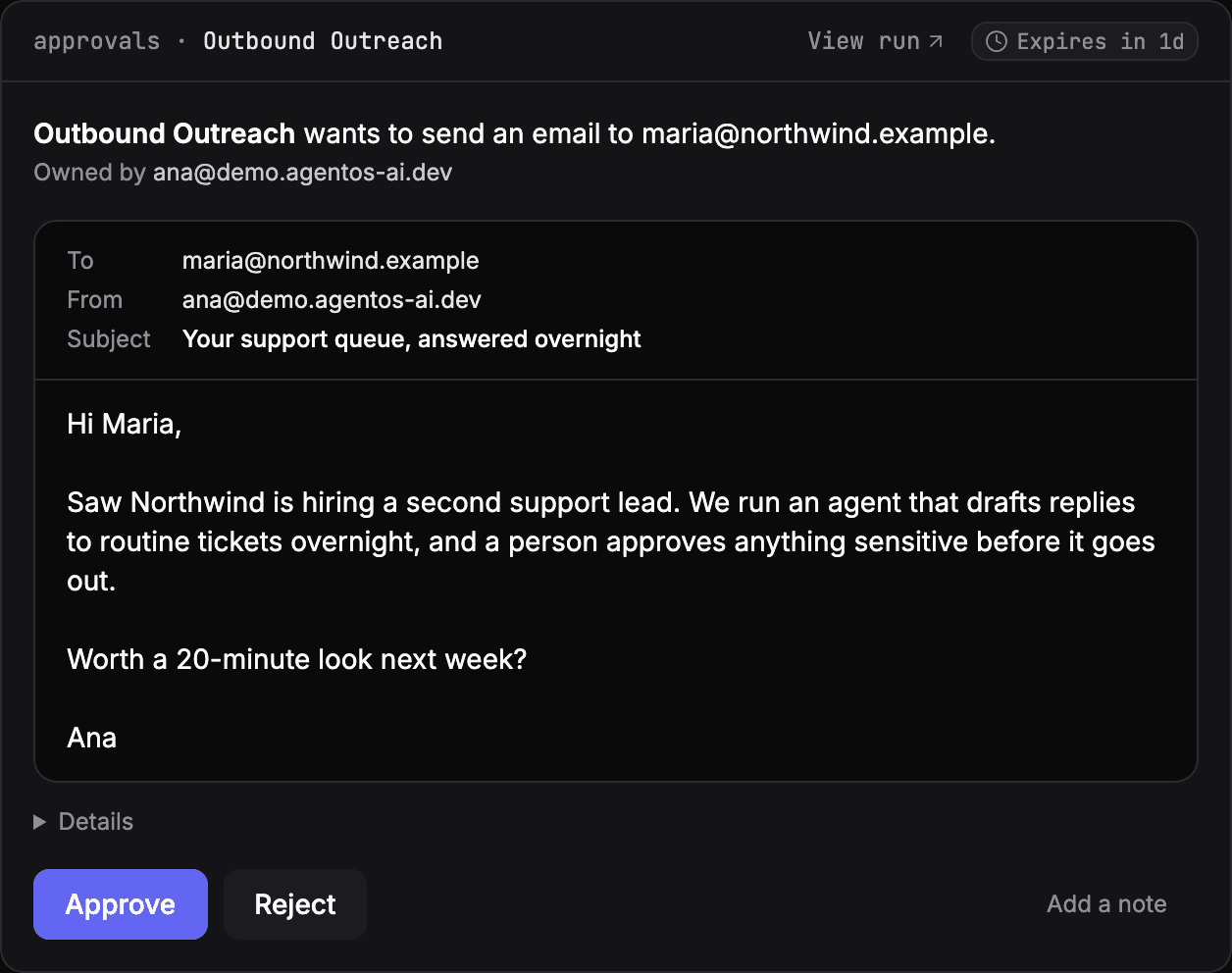
An approval now looks like the thing being approved. An email shows its recipient, subject and body the way the recipient will see it; a LinkedIn or X post shows its text, its link and its character count against the network's limit. Nothing is hidden: any detail the preview doesn't lead with is still listed beneath it.
When one run is waiting on several calls, they arrive as one decision: the first previewed in full, then Approve all, Review one by one or Reject all.
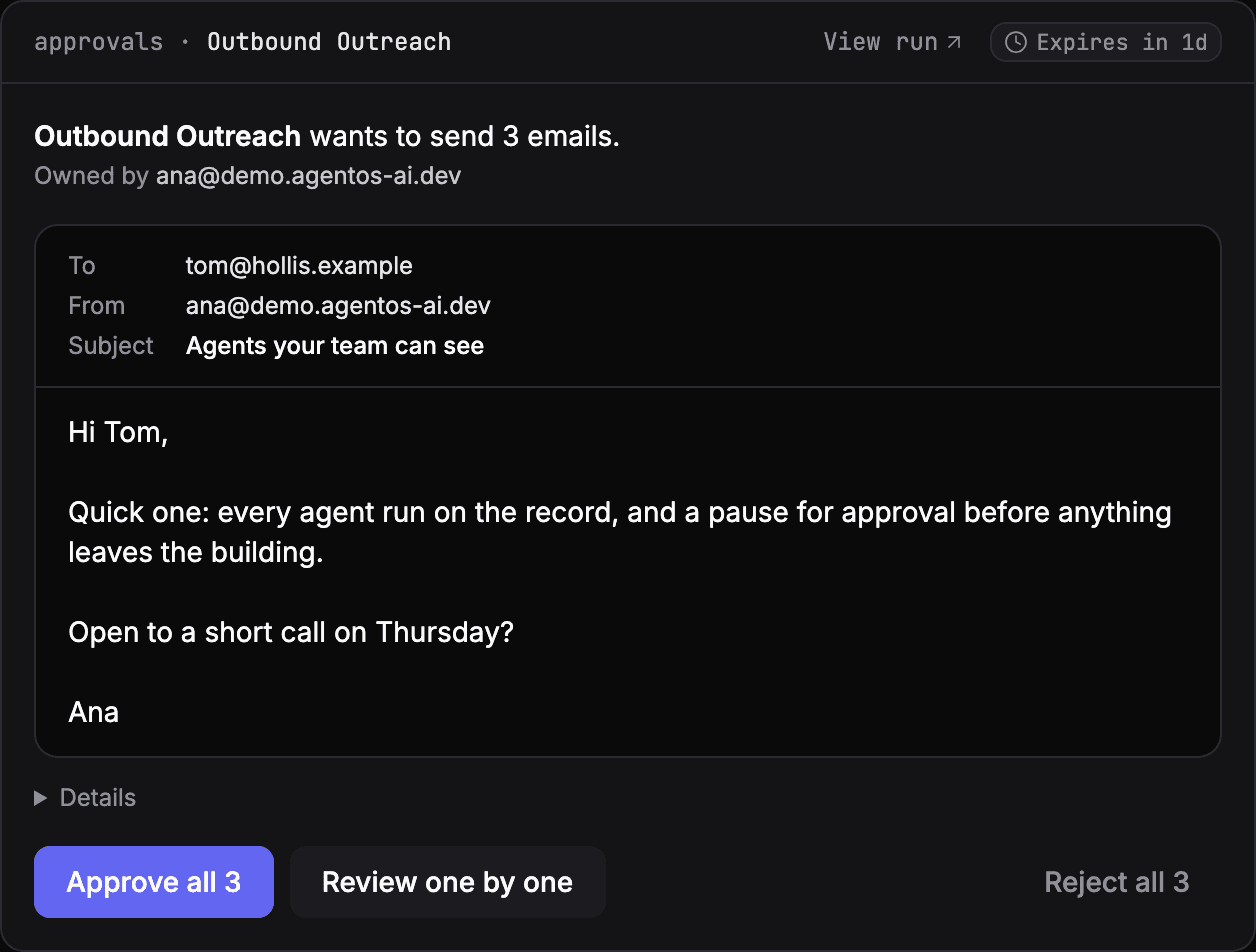
We also tightened how approvals are enforced: each gated tool call is now approved on its own, so approving one call in a batch never lets another through.
A summary on every run
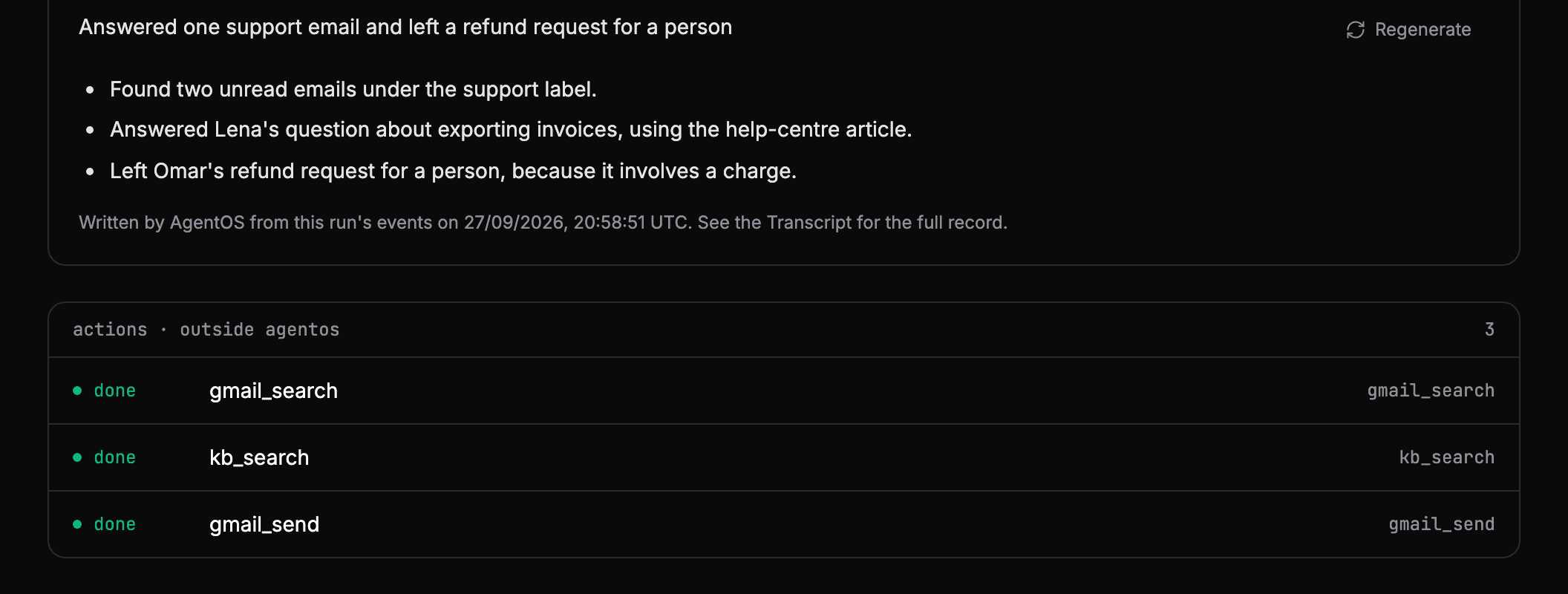
Every finished run has a Summary tab. It lists the actions the agent took outside AgentOS, and one click writes a one-line headline and a few plain-language points on what it did, from the run's events. You no longer have to read the whole transcript to know what happened.
The run page, rebuilt
The transcript reads like a log: each step with its time offset, tool calls on one line with their inputs and outputs, and the agent's markdown rendered properly, tables included. The run's tabs, from the transcript to the trace, share one layout.
Errors you can report
When something fails on our side, you now get a short reference instead of a raw error message. Quote it to us and we can find exactly what happened, without internal details ever reaching the page.
A new look
The product and the public site now share one visual language, the one from our landing page. Agent pages also load faster: they no longer wait on model providers before showing.
Security
We removed direct access to a set of internal database functions that should only ever run on our servers.
See your own agents like this
AgentOS records every run, pauses risky actions for approval, and tells you when an agent breaks.